

He picked up a racquet in Pokhara
with no blueprint and no guarantees, and rewrote what was possible for Nepali sport. Meet Abhishek Bastola, the trailblazer turing heads on the global tennis circuit
By Shine edit | Kathmandu

He picked up a racquet in Pokhara
with no blueprint and no guarantees, and rewrote what was possible for Nepali sport. Meet Abhishek Bastola, the trailblazer turing heads on the global tennis circuit
By Shine edit | Kathmandu
There is a moment that captures just how far Abhishek Bastola has travelled, literally and figuratively. In 2024 and again in 2025, he stood courtside at the BNP Paribas Open in Indian Wells, California, one of the most prestigious tournaments in the world, selected as a hitting partner for top ATP and WTA professionals including Novak Djokovic and Andy Murray. The boy from Pokhara, Nepal, who once slept in airports as a teenager just to make tournaments happen, had earned his place in that environment through sheer, unrelenting work.
At 28, Abhishek Bastola is not just Nepal’s number one tennis player. He is, quite simply, Nepal’s only professional tennis player, the first to forge a full career on the international circuit, the first Nepali to earn a full NCAA Division I scholarship (at the University of Texas at Arlington and Saint Mary’s College of California, graduating in 2020), and the first to qualify for the UTR Pro Tennis Tour, where the top 3,000 players in the world are invited to compete. He holds the highest UTR rating ever achieved by a Nepali player, a 12.4, and his matches have been streamed live on Amazon Prime and YouTube to global audiences.
“Pressure is a privilege. I don’t see it as something to avoid, it comes with the responsibility of competing at a high level and being a representative of Nepali tennis on the international stage,” says Abhishek Bastola.
The languages only differ in their grammar, their pronunciation and their most common words. Everyone realizes why a new common language would be desirable: one could refuse to pay expensive translators. The European languages are members of the same family.
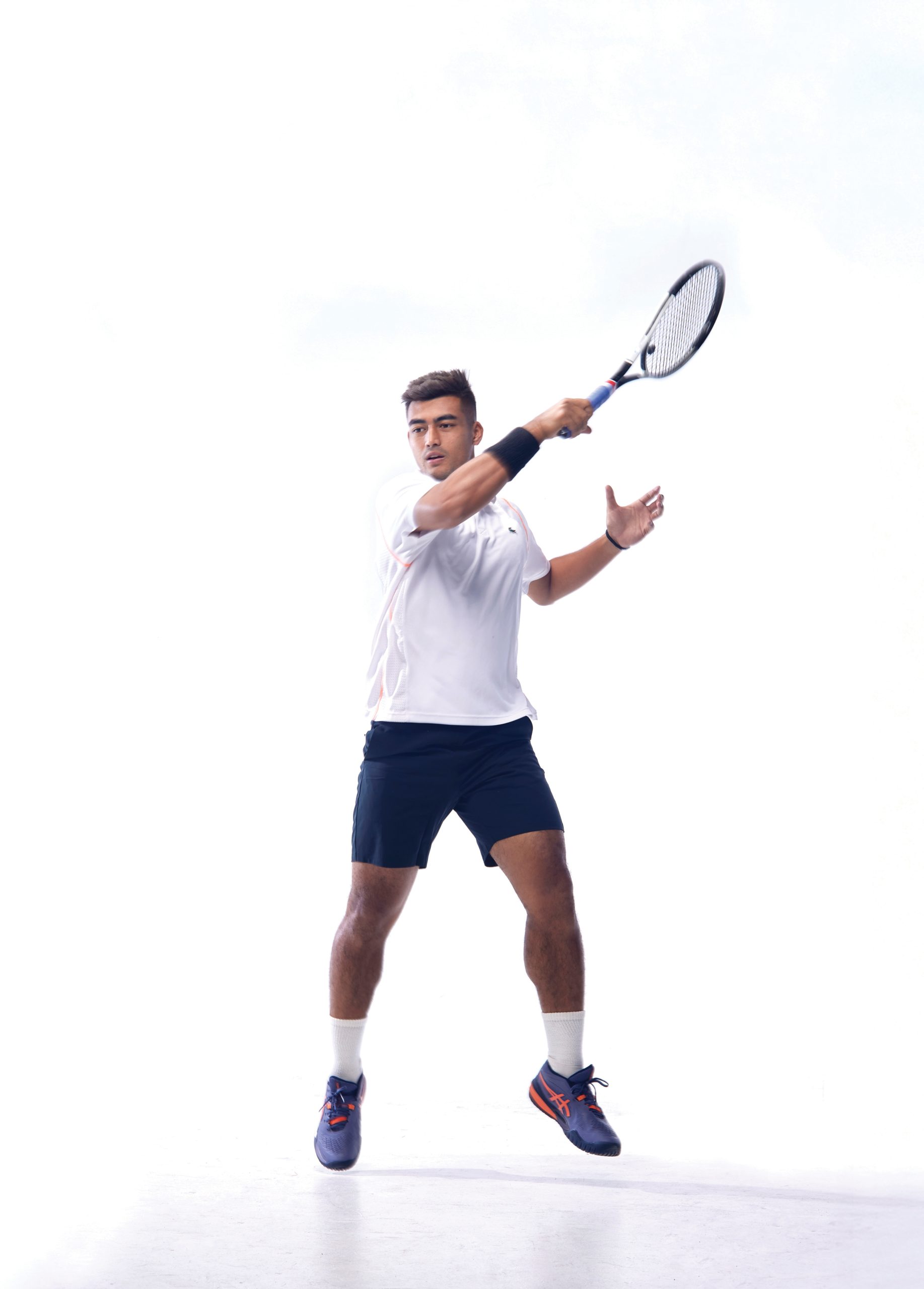
It started simply enough, a kid following his father to the court in Pokhara, falling hard for the sound of a ball connecting with strings. “I just loved hitting the ball,” he says. “Rain or shine, that’s where I felt at home.” What made it extraordinary was everything that came after that.
There was no structure around him. No federation pipeline, no high-level coaches, no ITF junior events on home soil. He began competing internationally at 13, slept in airports to make tournaments happen, and watched his parents sacrifice everything to fund his dream. “Without that,” he says plainly, “none of this would have been possible.”
The milestones have stacked up in a way that reads almost like fiction. He represented Nepal at the Asian Games in 2014 at just 15, the first Nepali male tennis player ever to do so, returning in 2018 and again in 2023, each time as Nepal’s number one. He carries a perfect 6–0 Davis Cup record, defeating the top players of Qatar, Yemen, Maldives, Guam, Brunei, and Bahrain. He has been undefeated in national competition since 2016.
“Tennis in Nepal is recreational, not professional,” he says, with the measured frustration of someone who has stared the problem in the face for years. “The biggest issue isn’t money or facilities, it’s the absence of the right people, with a clear and genuine vision.” He calls out the gap not to complain, but because he has been quietly working on the answer.
He credits his time in NCAA Division I sport as transformative. “You’re surrounded by strong players every single day, and that raises your standards automatically,” he explains. “We had two tennis coaches, a physio, an athletic trainer, and a team manager. That kind of structure allows you to fully focus on performance.” The contrast with what he returned to in Nepal, figuring everything out alone, funding his own international travel, receiving little to no recognition from official bodies, is stark. And he doesn’t shy away from saying so.
His Indian Wells experience as a hitting partner is the kind of detail that makes you stop and re-read. Selected on the strength of his UTR rating and professional résumé in 2024, he performed well enough to be invited back in 2025 – a moment he describes as deeply rewarding. On court with Djokovic and Murray, he saw first-hand what separates the elite. “It’s not just talent,” he says. “It’s discipline, consistency, and an almost obsessive attention to detail – how they warm up, how they recover between points, how precise they are in every ball they hit. Nothing is casual. Every ball has a purpose.” That environment, he says, changed his belief in what he himself is capable of.
“My journey shows that where you start doesn’t define where you finish. In tennis, performance is the only currency that matters,” says Bastola.
What makes Bastola’s story impossible to ignore in a conversation about women in sport is the structural reality he speaks to so candidly, one that is as true for female athletes in Nepal as it is for him. He is one of the few voices in Nepali tennis actively noting that female participation has declined since his junior days—and calling it out as a problem that demands a solution. “We need a better environment that encourages girls to start tennis, stay in it, and see a clear pathway forward,” he says. “Without that, participation naturally drops off.”
He believes the sport is uniquely positioned to build something meaningful for women. “Especially for women,” he says, “tennis can be a powerful space to build identity early.” He speaks about the sport’s capacity to develop independence, resilience, and emotional control—qualities forged through the singular pressure of competing alone on a court, with every outcome resting squarely on your own shoulders. For a country still navigating that conversation in sport, these are not small things to say out loud.
The legacy question sits easy with him, in the way it does with people who have already decided what they are building. Long-term, he wants academies, mentorship programs, and proper pathways so the next generation of Nepali players do not have to start from zero the way he did. “I want to be remembered as someone who opened the door,” he says. “And made that pathway feel real.”
For now, though? He has a ranking to climb, medals to chase at the 2026 Asian Games, and a Davis Cup record to extend. The king of the Nepali court isn’t done yet—not by a long shot.






Comments
adamgordon
Thanks for sharing this information is useful for us.