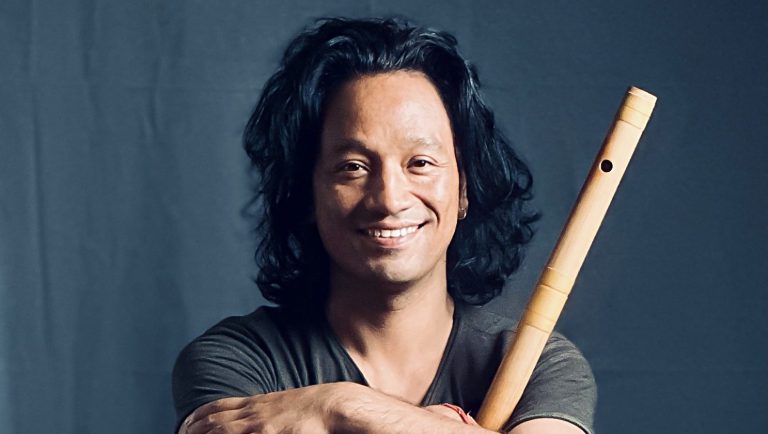
For millennia, music and festivity have been how the human spirit has celebrated life. Roopam Bhatti Mumbai, India
Music, Festivity and the Yoga of Sound
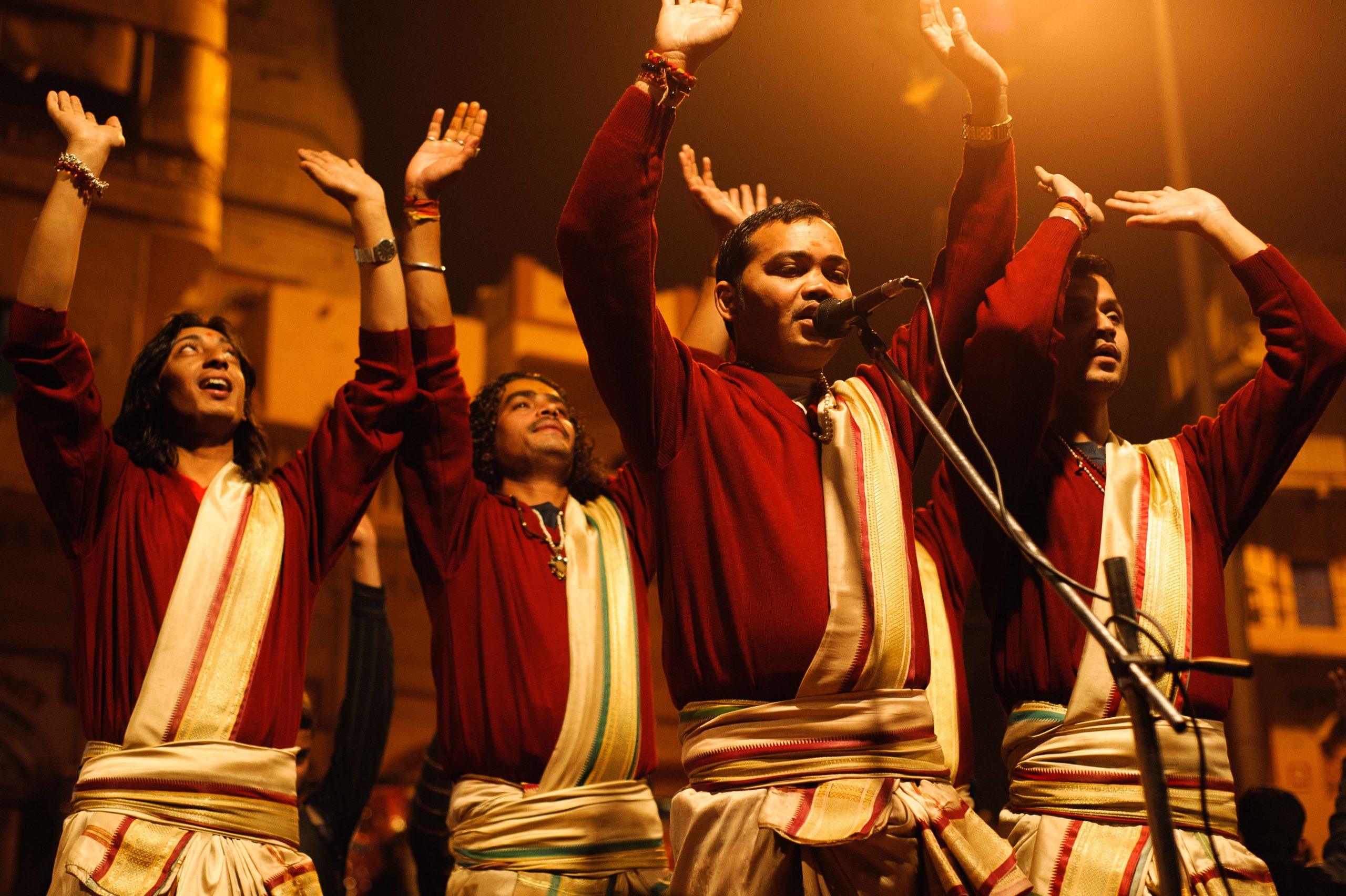
Before concert halls, recording studios or written language, there was rhythm: hands striking together, feet stamping the earth, voices rising and falling, drums carrying across a landscape. Humans have always gathered around sound, using song, chant and rhythm to welcome, mourn, celebrate, pray and mark the changing seasons.
Perhaps this is because music reaches something ordinary language cannot. We do not need to understand a song to be moved by it. A melody can bring tears, a drumbeat can move the body before the mind decides to dance, and a familiar voice can calm us almost instantly.
At the centre of this experience is vibration. Sound begins as movement, but our experience extends beyond hearing. We feel rhythm in the body and respond to tempo, repetition, harmony and intensity.
This helps explain music’s relationship with the nervous system. Slow, repetitive rhythms can settle attention, while lively rhythms encourage movement. Singing engages controlled exhalation, while group singing creates synchrony through shared breathing, listening and sound.
Modern science is beginning to describe these effects through changes in attention, breathing, heart rate, stress responses and social bonding. Yet cultures understood many of these possibilities intuitively, speaking not of the nervous system, but of spirit.
From Sound to Stillness
Sound is deeply connected with memory and emotion. A song can transport us to another time, while a familiar voice can make someone feel present even from afar. A temple bell, church hymn, Sufi qawwali, Buddhist chant or village drum can transform the atmosphere of an entire space.
The same capacity that makes music moving also makes it contemplative. In the yogic tradition, this exploration is known as Nada Yoga, the yoga of sound. Nada is commonly translated as sound, but within Indian spiritual traditions, it can become a doorway into attention itself. When we sing, vibration is produced and felt within the body. We hear the voice externally while experiencing its resonance internally. The voice thus becomes both sound and sensation, making singing a powerful contemplative practice.
The Body as an Instrument
Every sound we produce involves the body. Breath moves. The vocal folds vibrate. Resonance develops through the throat, mouth, chest and skull, while muscles continuously adjust to shape pitch, volume and tone.
When we become attentive to these sensations, singing stops being merely about producing a pleasant sound. It becomes an investigation.
Where does the vibration begin? Where is it felt? What happens to the breath when the pitch changes? What happens when we soften the voice? What happens when we stop trying to sound a certain way?
This is where the practice can move towards meditation.
Swami Niranjanananda Saraswati observed that in ancient times, music was used not simply to please the mind but to tranquillise its agitations.
That distinction is important.
The Meditative Power of Repetition
One of the simplest features shared by many contemplative musical practices is repetition. A mantra is repeated. A rhythm returns. A melody circles back. A chorus is sung again and again.
Repetition reduces the number of decisions the mind has to make. We no longer need to wonder what comes next. Attention can settle into the rhythm.
This may help explain why chanting, humming, drumming and repetitive musical forms appear across cultures. The experience does not depend entirely on believing in a particular philosophy. The body itself participates.
For a Nada Yoga practitioner, this is central. The sound is not simply something to listen to. It becomes the object of attention. The practitioner listens to the voice, feels its vibration and gradually becomes aware of the spaces between sounds.
The Science of Resonance
Resonance is central to sound healing and yoga, but its traditional claims should be distinguished from established science. While the body responds physically to sound and vibration, the idea that specific frequencies can “retune” or heal individual organs is not supported by current evidence.
What is better established is sound’s effect on mood, attention, breathing, movement and social connection. Singing engages breath and body, while shared music creates synchrony and belonging. Sound does not have to be mystical to be profound. The mystery is already there in the nervous system.
From Celebration to Contemplation
Music is central to festivals because it creates a shared field of attention. Singing, drumming and dancing bring people into synchrony, creating a sense of belonging and collective participation. Festivals interrupt ordinary life and allow communities to remember themselves through shared ritual and sound.
Yet sound can also turn us inward. This is where festivity and Nada Yoga meet: both arise from the human impulse to make sound, but one moves towards collective expression, while the other leads us towards deep listening.
The Sacred Word
The idea that creation begins with sound appears in several religious traditions. Vedic traditions speak of the significance of Vak, sacred speech, while the syllable Om becomes one of the most important symbols of sacred sound. The Gospel of John opens with the profound statement: “In the beginning was the Word.”
These are not scientific descriptions of the origin of the universe. They belong to different philosophical and theological worlds. Yet they point towards a persistent human intuition: that sound, speech and vibration possess a generative power.
We create worlds with words. We change emotional states through tone. We gather communities through songs. Through chanting, singing and silence, we can also turn language back towards the person who is speaking it.
Voice as an Inner Journey
The human voice is more than a means of communication; it can become a way of communicating with ourselves. When we sing, we encounter confidence and inhibition, pleasure and grief, control and surrender. Sometimes the voice feels free; sometimes it reveals tension or emotion. The voice reveals us.
This is why Nada Yoga is an inner journey, not simply a vocal technique. We ask not only, “How do I sound?” but “What happens to me when I sound?” Vibration is felt physically, attention becomes refined, and emotions come into awareness. The traditional koshas describe layers of being, suggesting that sound can touch the physical, energetic, mental and emotional dimensions of our experience.
From Sound to Silence
There is no contradiction between music as festivity and music as meditation. Both arise from the same human impulse. We sing in joy, grief, prayer and celebration; we sing because we want to belong.
Hazrat Inayat Khan wrote that “the shortest way to attain to spiritual heights is by singing.” Singing asks us to breathe, listen, feel vibration and participate, drawing us out of the conceptual mind and back into the body. For millennia, people have gathered around fire, temple, harvest, birth, death and changing seasons, using rhythm, dance and sacred words to connect and transform.
Perhaps this is the essence of Nada Yoga: not simply producing sound, but learning to listen through it. To feel vibration, steady the mind through repetition and move from expression towards awareness. From noise to rhythm, from rhythm to listening, from listening to stillness, and sometimes, from stillness back into song. The deepest yoga of sound may not be about producing a beautiful voice, but becoming still enough to hear what the voice has been carrying all along.
Roopam Bhatti is a Mumbai-based RYT-500 certified Yoga teacher and medical yoga therapist. She is the co-founder of Rasa Yoga & Being.
She promotes the Iyengar tradition’s emphasis on anatomical alignment, biomechanics, and the intelligent use of props for precision and safety.