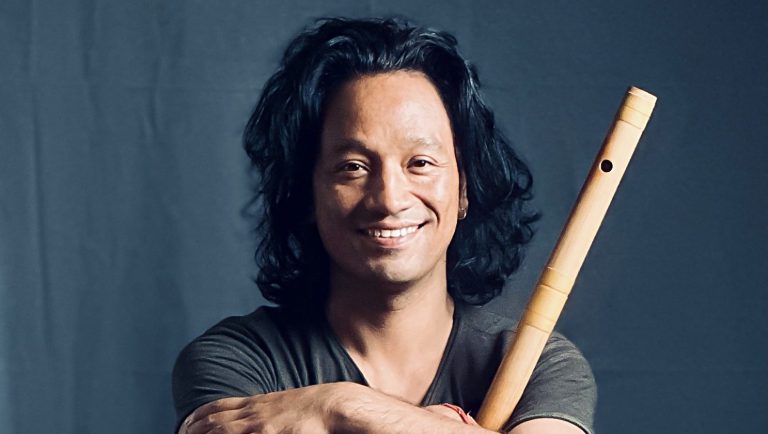
Alok Thapa on curiosity, change and the lifelong journey of finding your voice.
Finding your Frequency

“Namaste Kathmandu” is a voice many listeners heard across during the 2000s, a familiar greeting that became part of the soundtrack of a city finding its rhythm through radio. For Alok Thapa, however, the voice behind the microphone has never belonged to just one medium. His journey has moved through radio, journalism, television, filmmaking and photography, with each chapter teaching him a different way of seeing and communicating.
Radio taught him to speak, journalism taught him to question, filmmaking and photography taught him to observe, and television taught him the importance of being present. His story reminds us that finding your voice is not a destination – it is something you continue to discover along the way.
You have worked across radio, journalism, filmmaking, photography, television and storytelling. What did each chapter teach you about finding and trusting your own voice?
I think each chapter taught me something different. Radio taught me how to communicate. Journalism taught me to ask questions. Filmmaking and photography taught me to observe and sometimes say more without words. Television taught me how important it is to be present in a situation.
But more than anything, moving between all these things taught me that my voice doesn’t have to fit into one box. It has changed as I have changed. I think finding your voice is about being comfortable with who you are and what you have to say.
Radio has been an important part of your career. What did those early years behind the microphone teach you about confidence, communication and connecting with people?
Radio was probably one of my biggest teachers. When you’re behind a microphone, you don’t have a lot. All you have is your voice, your thoughts and the person listening on the other side. It was a course in communication that
I still carry with me, no matter
what profession I am in.
It taught me to listen, which I think is just as important as speaking.
Music and radio have always been closely intertwined. Is there a particular song, artist or sound from your younger years that takes you back to a defining moment in your life?
There are too many to pick just one. That’s probably what I love about music. A song can take you back to a particular moment, a person or even a version of yourself.
Some songs remind me of being young and listening to FM when it had just started in Kathmandu, when music was the main source of entertainment. I still think that’s one of the special things about radio and music. They become part of your memories without you even realising it.
Your career has involved constantly telling other people’s stories. What have those stories taught you about your own life?
They’ve taught me that everyone has a story, and that you should never assume what someone has been through just by looking at them. I’ve met people from very different backgrounds and heard stories of loss, ambition, humour and hope. It has made me more patient and more grateful.
It has also reminded me that most people are simply trying to make sense of their lives, just like the rest of us. So be kind.
If your life so far were a playlist, what would be the one song you would put at the beginning, the one you would play at a turning point, and the one you would end with today?
I’d probably start with “Everywhere” by Fleetwood Mac. There is something about that song that has always stayed with me.
For the turning point, I’d choose “Kehi Mitho Baat Gara” by Narayan Gopal. There have been lots of ups and downs in life, but I’ve just kept moving, telling myself it’ll be all right.
And today, I’d probably end with “Vienna” by Billy Joel. It talks about slowing down and not feeling like you have to figure everything out immediately.
Finally, what is the one piece of advice you hope the next generation of storytellers, broadcasters and creatives carries with them?
Stay curious. Don’t be scared to ask questions. Don’t be afraid to start something you don’t know how to do. And don’t worry too much about finding your voice. Keep doing the work, and be honest about what you see and feel.