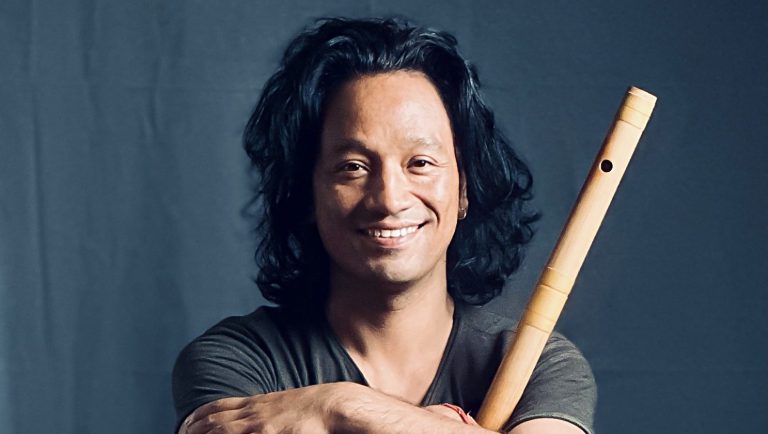
Viplov Pratik and Sambhujeet Banskota on preserving Nepal’s musical heritage while making room for what comes next By SHINE EDIT | Kathmandu
The Notes Are Universal The Cultural Is Ours
Music rarely stays still. It travels with people, crosses borders and absorbs new influences, yet still carries something recognisable of where it began. For Nepali music, the question of identity is especially layered, spanning regions, languages and generations, from folk and ritual traditions to cinema, pop and today’s digital sounds.
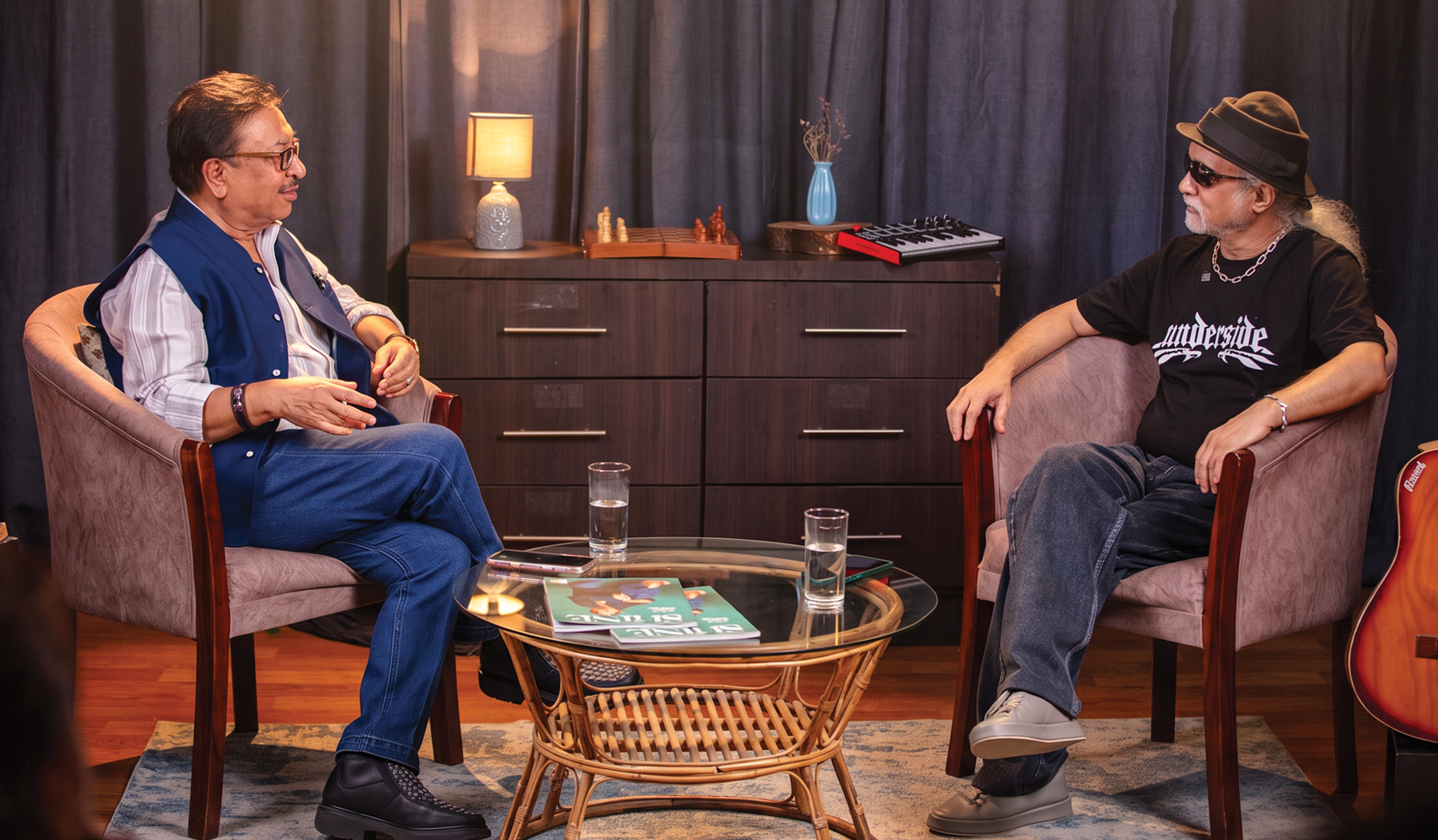
In this issue’s In Conversation, poet, novelist, lyricist and translator Viplov Pratik talks with composer, singer and lyricist Sambhujeet Banskota about what makes music distinctly Nepali, and what happens when that identity meets a fast-changing landscape. From the character of a madal to TikTok, archives and royalties, and the need to preserve histories at risk of disappearing, the conversation is less about nostalgia than continuity: how can Nepali music evolve without losing the cultural memory that gives it meaning?
How do you define music as Nepali? Is it defined by the words, the music, the singing, or something else? What makes a song Nepali?
Sambhujeet: For me, Nepali music, songs and literature are a form of unity. Our language, our ancestors and our songs connect us, and so do our national songs. We have many musical traditions, like Sorathi, Chyabrung and Chudka, all connected with raga, the environment and nature. When a Nepali creates music, it carries something of that identity. A person can live anywhere in the world and still be Nepali if they care for their tradition and culture, and the music they make carries that history too. Nepali music is born from a mixture of influences: raga, ragini, Pahadi traditions and our own culture. What do you think, Viplov?
Viplov: I completely agree. Someone who doesn’t know music well may struggle to tell Nepali and Hindi music apart. But listen closely, and you can recognise the character of different places. You can hear an African, Russian or Iranian flavour. You’ve spent your whole life immersed in music, so your understanding runs deeper, but I’ve been close to music too, and I can feel these differences. Take Ringo Starr: whatever his ancestors and musical background gave him comes through when he plays. Whether someone is playing gypsy jazz or the madal, something of their cultural background stays in the music.
Sambhujeet: Exactly. When you play an instrument, you bring history and culture together. The people who made the drum, the sarangi or the madal, and the traditions around them, all remain in the way it’s played. That’s how we recognise musical traditions through instruments. We hear something and wonder whether it’s Mongolian, Vietnamese, Thai or African, because musical styles carry the identity of where they come from. We do the same with Nepali music. Is it from the mountains? Nepal itself holds many musical identities. Ultimately, when a Nepali plays an instrument within our cultural context, something distinctly Nepali comes through.
Viplov: Some people say our music is being lost. But we are an extremely diverse people, with music from the East, West, North and South. When people aren’t aware of that diversity, they say Hindi and Nepali music are the same. But there is a space between them.
Sambhujeet: There is a lot of difference.
Viplov: If we look at Nepali music as a whole, we find something that belongs to us. We may be inspired by other music, but when that inspiration passes through our own culture, it takes on another colour.
Sambhujeet: There is no absolute boundary in music. The seven notes and twelve tones are the same everywhere. What changes is the culture within us, and that shapes what we create. Language plays a part too. The songs of our poets, our poetry and literature are part of the spirit of our music. So is the pronunciation of Nepali singers; when foreign singers sing Nepali songs, it can sound different. When we look at Nepali melodies, songs sung by Nepalis and lyrics written by Nepali lyricists, something comes from Nepal itself.
Viplov: We could talk about this for a long time. But I’d say we don’t need to worry about whether others recognise the difference. Nepali music may share similarities with music from elsewhere, but when a Nepali hears a melody that belongs to it, they instinctively feel, “This is mine. This is Nepali.”
Sambhujeet: Absolutely. A Nepali listener knows it’s the music of our country.
How do you see the history of Nepali music, and what has been passed down to us?
Viplov: The recorded history of Nepali music and literature is relatively short, but the oral tradition is long. Songs such as Rajamati Kumati and Sirsaya Heku have survived generations through the shruti tradition. Recorded music is far less documented, and that is an important gap in our history. Some musicians had no formal training but absorbed the essence of the music around them, and that is how we got remarkable artists. The way Nepali artists took in different influences created another dimension of our music.
Sambhujeet: Nepal’s musical history isn’t limited to Kathmandu. There are traditions from the East, West, North and South: songs, chutkas, bhajans, balans. We can’t always say what came first, because much of it was never systematically recorded.
What has happened to the relationship between poetry and music?
Viplov: There was a time when songs held both. I often think of Timro Aankha Ko Sagar Ma, where the poetry was as important as the melody. Today I feel poetry is being lost, even though it can still be central in Western and Hindi songs. John Lennon’s Imagine is poetry too. When poetry disappears, no matter how much music we compose, something is missing. I don’t think our generation can bring back what’s been lost, but perhaps the next will carry forward what we’ve given them.
What was music’s place in everyday life before, and how has that changed?
Sambhujeet: Music was part of daily life. During Dashain, the atmosphere began long before the festival itself, with music in the temples early in the morning and Malashree heard across Kathmandu. We’ve moved away from that. Nature, society and the economy have changed, and music has changed with cinema, technology and popular culture, absorbing Bollywood, South Indian cinema and Hollywood. People also used to spend more time learning, reading and understanding music. Today anyone can pick up a guitar and play chords, but there’s less emphasis on history and foundations. And yet old music keeps returning. Old songs still go viral on TikTok.
How should Nepali music respond to digital platforms?
Sambhujeet: Digital arrangements and new technology aren’t necessarily bad. We have to accept change, but we also have to preserve our culture. Music, journalism, culture and the business around music all need to evolve together. Nepal has been recognised internationally for its natural heritage, its sports and its music.
SHINE: We’ve seen this abroad. In Malaysia, audiences responded strongly to a rearranged, harmonised Nepali song.
Sambhujeet: It stayed recognisably Nepali, which shows we can create new things while keeping them rooted in Nepali identity. If the next generation, through artists such as Kumal Sagar, Deepak Bajracharya and other bands, develops music in their own instrumental styles, our songs can continue to be our own.
What needs to be done to preserve Nepal’s musical heritage?
Viplov: Many artists’ work has been forgotten or poorly documented, and recordings at institutions such as Radio Nepal have been lost or deleted. Television archives are the same. Music and cultural programmes featuring important artists are now hard or impossible to find. Who will organise these archives, and who will preserve our dance, music, theatre, art and literature?
Sambhujeet: There is still a lot of research to be done, and academies and institutions should play a role. The nation needs proper archives. These things cannot be left in basements. The tapes at Radio Nepal belong to our cultural history and need to be preserved systematically.
How can artists be better supported, through royalties and by the government?
Viplov: Royalty is the author’s right. Artists spend their lives creating work that keeps generating value. Today, people earn from music through digital channels, but the creators must receive their rightful share. Private organisations deal with royalties, but the system needs stronger institutional support. The government has an important role here. A music board shouldn’t consist only of musicians. It should bring together people from IT, music, youth, international affairs and law, to organise information, manage systems and help bring revenue back into the country.
Sambhujeet: The state needs to make the system work, so that the economic value of Nepali music benefits both artists and the country.
India built a large ecosystem around film music. What can Nepal learn from it?
Viplov: India had poets, lyricists, composers and musicians all contributing to film music, and songs were recorded, distributed and preserved. Nepal also has talented lyricists, such as Yadav Kharel, Kiran Kharel and Dinesh Adhikari, whose words carry poetry and stories, but we never built the same system around them. Today’s music can be popular, sweet and commercially successful, but poetry is gradually leaving it.
After everything we’ve discussed, where is Nepali music heading?
Viplov: Nepali music has a long history, much of it undocumented. We need to preserve the past while creating new music. The goal shouldn’t be to copy the past or reject it. We need to understand where our music comes from and create from that foundation.
Sambhujeet: We should accept technological and musical change without losing our cultural identity. New arrangements, instruments and production methods can all be used, but the creation should stay rooted in Nepali culture.