Most people today know Malashree only as the music of Dashain. In truth, it is the music of autumn, devotion, nature, and victory. By: Sabin Munikar | Kathmandu
MALASHREE DHUN-A MELODY OF NATURE, DEVOTION AND VICTORY
Nepal is rich in cultural and musical heritage. Since ancient times, people lived in close harmony with nature, worshipping the sun, earth, water, and seasons as the source of life. As society developed, music developed alongside farming and festivals, with every season taking on its own melodies—used not only for entertainment but to express gratitude and bring people together.
Among Nepal’s musical traditions, Dapha music is one of the oldest classical forms, developed mainly between the 11th and 18th centuries and reaching its height during the Malla period, Nepal’s golden age of art and culture, when royal patronage helped it grow into a respected community tradition sung in temples and public squares. As the Newa scholar Dharma Munikar notes, the tradition is also known as Ritu Dhun or Ritu Geet— “melodies of the seasons”—reflecting its tie to the yearly cycle of festivals and farming life.
The Malashree Raga
The Malashree Raga, one of Dapha music’s key seasonal traditions, is practiced from Yela Kasa Astamiī through Kojagrat Purnima, with groups gathering each evening to perform it. Most people today know only the instrumental tune played during Dashain, calling it Malashree Dhun—but the true tradition is a full collection of devotional songs in one rãga, set to varied rhythmic patterns (tala). As Dharma Munikar observes, the popular Dashain tune is only a small part of the much larger body of Guara and Chali that makes up Dapha music as a whole.
The season also marks Nepal’s autumn: the monsoon has passed, skies clear, and rice fields ripen. The music’s calm character mirrors this beauty—hearing it feels like welcoming a season of hope and abundance.
Instrument and Rhythm
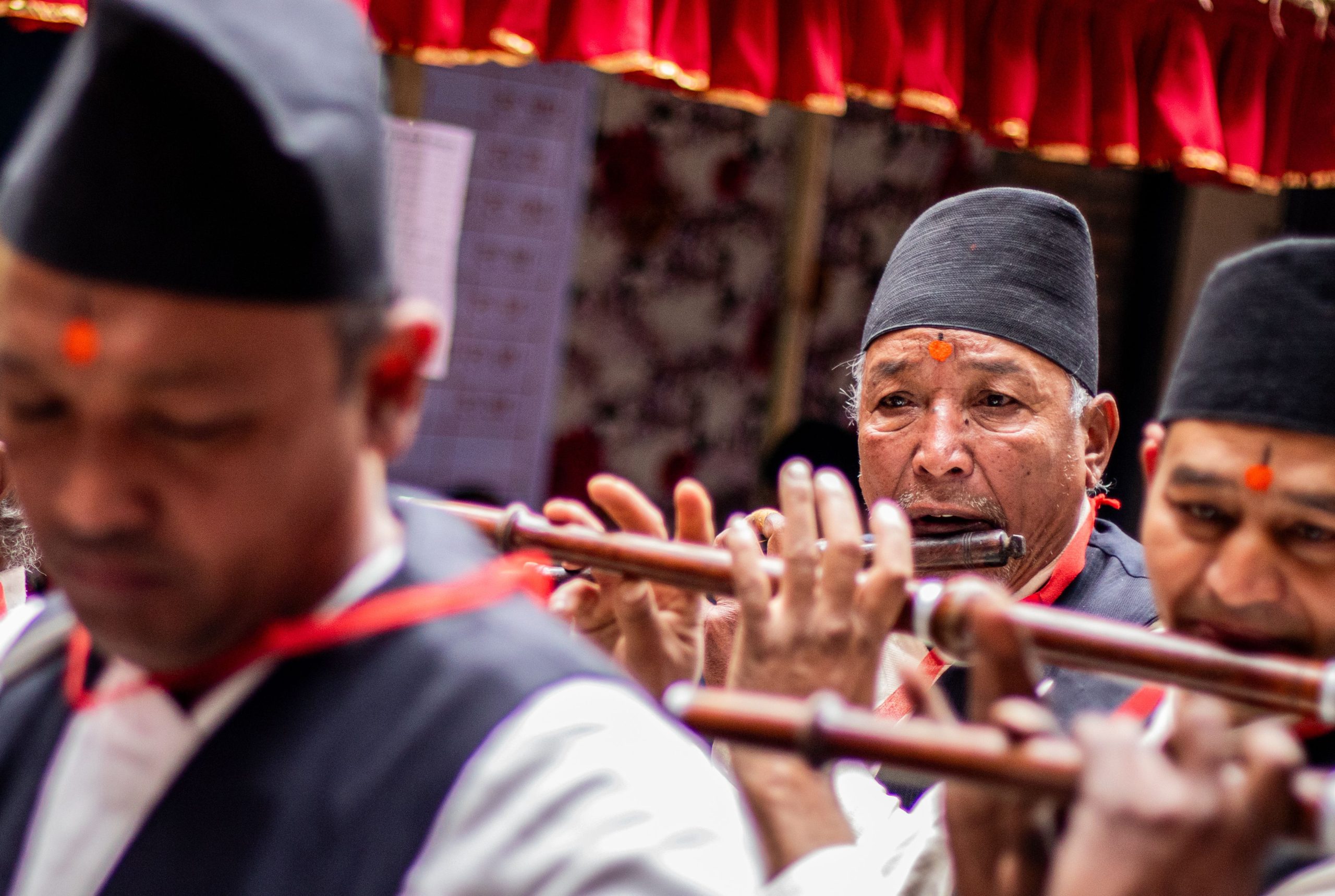
Malashree Raga is played on classical Newa instruments—Khin, Kanta Dab Dab, Kocha Khin, Tinchu, and others. According to Dharma Munikar, the Khin is the principal instrument of Dapha Sangeet, supported by companion bajas: a processional bhaja, and the Dholak, Kantantak, and Nagra Baja. During Jatra processions, the smaller Kocha Khin substitutes for the Khin where needed, paired with the Bhaya Baja.
The Ta Baja (three forms), Babu Dha Baja, and Ponga Baja complete the ensemble.
This rhythmic depth is fundamental. Munikar notes a single song can move through seven distinct beats, reflecting a tradition built on rhythm first—which is why Malashree Dhun traditionally follows a 7/4 cycle, an expression of this same principle across Dapha music, not a feature unique to the Dashain tune.
More Than One Goddess
Malashree songs are not dedicated only to Durga; the collection includes praises to Mahalakshmi, Panchakumari, Vasundhara, Shiva, Bhairav, Krishna, Bhimasen, Kali, Lumadi, and other divine forms. Dharma Munikar notes that the strong Malashree—Durga association is actually a later development—Dapha Sangeet historically drew on the full Newa pantheon, and the Durga-centric framing grew as Hindu tradition gave increasing prominence to Durga Bhawani. Together, these songs speak to the whole of human life: prayers for wisdom, courage, prosperity, and protection.
Some songs are tied to specific communities: songs to Maiti Ajima are conventionally sung by the Munikar community, while songs to Neta Ajima and Wanga Kodmala Ajima belong to community leadership. Dharma Munikar cites this local specificity as evidence that Dapha music is a genuinely native Newa tradition, not one borrowed from outside.
Mohani Nakha and the Newa Dashain
For the Newa community, Dashain is celebrated as Mohani Nakha, one of the year’s most important festivals. Munikar notes that Mohani (or Mouni Nakha) and Dashain are historically distinct, though now widely spoken of as one—a conflation he attributes to the growing influence of a more homogenised Hindu Dashain culture. Mouni Nakha is traditionally observed over three days and includes a ritual at the Tukuti worship site, where a black Mouni tika is prepared and given to children as a blessing; guests are invited and extended families gather for one of the community’s largest festivals.
During Mohani Nakha, people worship not only gods but the tools of their livelihoods—farmers’ tools, craftsmen’s instruments, traders’ tools of business—a reminder that any tool supporting honest work deserves respect. Elders also give Mohani Sinha, a blessing symbolising protection and the passing of love across generations.
Victory as a Universal Message
Durga’s victory over evil represents knowledge over ignorance, courage over fear, and truth over falsehood. Malashree teaches that life’s hardships can be met with wisdom and patience; it is a song of transformation, a reminder that clear skies follow every storm, just as autumn follows the monsoon.
A Living Classical Tradition
Dapha is a genuinely classical tradition, rhythmically intricate beneath an apparently simple surface—an interplay of raga, tala, poetry, and performance that only trained musicians fully grasp. The 2/4 arrangement commonly heard today on radio and social media suits modern audiences but comes at some cost to the original’s flowing, meditative 7/4 character. Though Dapha shares ideas with Hindustani classical music, its melodies, rhythms, and teaching methods form a distinct identity, deserving recognition as an independent Nepali classical tradition—one in which music reflects the universe’s own rhythm, from the sun’s cycle to the human heart.
Nasadya: The Discipline Behind the Music
Munikar describes a deeper principle underlying the tradition: Nasadya, revered as the presiding deity of music itself. Before formal instruction begins, students traditionally make an offering to Nasadya, bound by strict rules meant to keep them focussed until training is complete. This reflects a broader philosophy: musical knowledge is not “scientific,” learned from text, but practical, transmitted directly from guru to disciple and requiring real discipline to absorb.
Notably, Nasadya has no fixed form and is represented in no temple by any statue— instead by three walls, commonly read as mother, father, and guru, a reminder that musical learning is inseparable from lineage. Its purpose, in Munikar’s telling, is to keep this transmission free of obstruction across generations.
The Urgency of Preservation
This tradition faces real threats. Much of it survives only through oral transmission from elderly masters, and as fewer young people take it up, original melodies and techniques risk disappearing. Munikar explains that part of the difficulty is script: lyrics can be written in Ranjana or Nepali script, but many community members are not fluent readers of either, limiting documentation even when attempted. Performance style also varies from teacher to teacher, since no single standardised text exists. Bringing together specialists in lyrics, music, and history to agree on consistent versions of the most widely shared songs is, in his view, a necessary step toward firmer footing for formal teaching, in Nepal and abroad.
Professional recording and digital archiving of the songs, rhythms, manuscripts, and instruments have become urgent. This heritage belongs not only to the Newa community but to Nepal and the world—once lost, it cannot be recreated.
Most people today know Malashree only as the music of Dashain. In truth, it is the music of autumn, devotion, nature, and victory—entertaining the ear, touching the heart, and inspiring the mind. Every note recalls that after hardship comes hope, after darkness comes light, and after every struggle comes victory. That is the true spirit of Malashree Dhun.
Additional context on Dapha instruments, rhythm, community-specific songs, the Nasadya tradition, and documentation challenges was contributed by Dharma Munikar, drawn from an interview on Mahaswet Dhun and Dapha music.
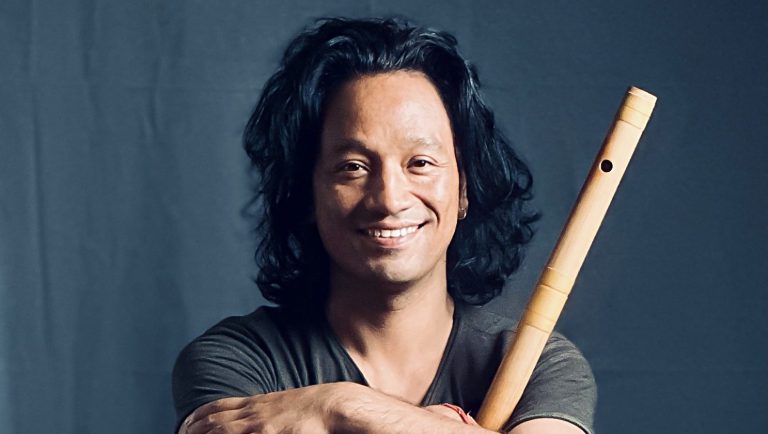
Sabin Munikar is a Nepali musician, composer, educator, researcher and artistic leader. Founder of Kathmandu Music Institute and Director of the Kathmandu Youth Orchestra, his work spans music education, composition, orchestration and the preservation of Nepal’s musical heritage. He is the author of Tunes of Nepal (2025) and Songs of Nepal (2026).