
At Traditional Alley, Renu Shrestha designs pieces that begin with traditional Nepali shapes but prioritise versatility and careful construction. By ANWEITI UPADHAYA | Kathmandu
Giving Traditional Pieces An Upgrade
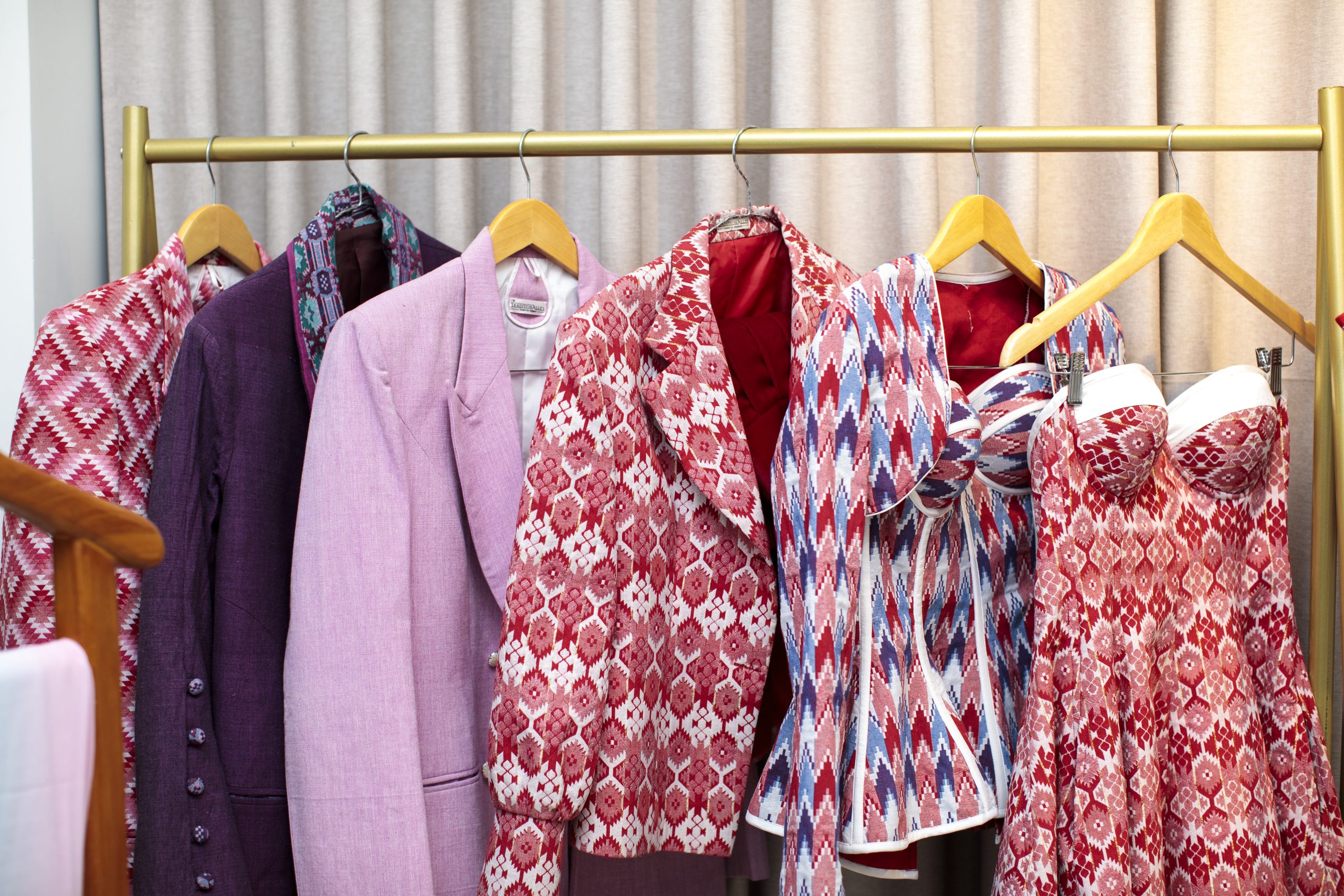
On a low table in an apartment in Hattiban sit three versions of the same kurta, each with a slightly different sleeve length and hem. Renu Shrestha moves between them, checking how the cloth falls when the wearer sits, stands or raises an arm.
The designer and owner of the popular fashion house Traditional Alley, Shrestha rarely designs a piece that can be worn only one way. She tests each garment by draping it differently, pairing it with other items from the collection and asking how many occasions it might suit.
She developed this habit of testing and adjusting designs during the many years she spent popularising the concept of refashioning, turning existing clothes into something fresh, while working in different areas of the fashion industry.
Early Roots and Making Clothes
Shrestha was an artistic child who spent long stretches of time sketching. She also made new clothes for her Barbie dolls and regularly asked her mother and grandmother to help stitch the
tiny garments. A lover of colour in everything, especially clothing, she has always preferred a maximalist approach to fashion, and these early preferences still appear in her work.
After finishing her A Levels, she joined a fashion diploma course at IEC in Pokhara because she believed it would give her more time to sketch.
She often stayed back in the classroom for eight hours, six of them beyond the official lesson time, simply sketching.
Sewing was difficult for her at first, and she took a short break from the course because of it. When she returned, she discovered that pattern-making relied heavily on mathematics. Having always enjoyed math, she found herself drawn to the technical side of garment construction.
Once the diploma was complete, Shrestha volunteered wherever she could, at tailors’ workshops and small boutiques, to practise stitching and designing. It
was during this period that she first came across fabric manipulation, something she continues to use extensively in Traditional Alley designs.
She later took an online course in pattern-making and began using sites such as Pinterest and YouTube as sources of new cuts and construction ideas.
Only then did she begin freelancing.
Freelancing Years and Focus on Reuse
Shrestha started freelancing in 2012, working from her home in Pokhara. Clients found her through Facebook, where she posted photographs of designs she had made and worn herself. The response brought a steady stream of orders, with customers coming to her home to discuss measurements and details.
She continued this way until 2014. After spending two years working in other fields, she returned to fashion freelancing and moved back to Kathmandu in 2016, still working from home.
Since her teenage years, Shrestha had kept her clothes, including old ones, rather than discarding them. For ideas on what to turn them into, she would walk through clothing stores for hours, studying new designs, then return home to sketch her own versions and eventually transform her old clothes into stylish new pieces.
That habit of reworking existing garments has stayed with her. Between 2016 and 2018, she ran a YouTube channel devoted to refashioning. The channel remains online, with videos dating from 2017, including a series of 33 detailed tutorials showing how to turn kurtis into overalls, jeans into denim skirts and men’s shirts into summer dresses, among other things.
She was among the first in Nepal to present the idea of refashioning in this way. The same attention to extending the life of clothing and carefully reworking garments would later shape the collections she produced under her own label.
The Kantipur Experience
By 2018, Shrestha’s refashion videos had developed a small but steady following. She was also appearing on television, radio and in newspapers as someone who had brought the idea of reworking clothes to a wider Nepali audience.
One such interview was on Kantipur Television’s programme Ke Aaja Ghar Mai. She was asked to refashion three garments for the programme, and the crew filmed every stage of the process over a month.
The team liked the results and later offered her a position as their in-house stylist, with office hours from nine to five. Shrestha had never worked in an office and disliked the idea of remaining in one place for long stretches.
“I think all creatives will relate to this,” she says, “but if I’m left to manage my own schedule, I can get so many things done within eight hours.”
She explained her preference for flexible hours, but the station’s management rules did not allow part-time arrangements for stylists, so the offer fell through.
Four months later, Kantipur’s team sent her the same invitation with identical terms. Shrestha repeated that she could complete the work but could not be at the office every day for eight hours.
After some hesitation, both parties agreed to a trial. She attended only two days a week, and the arrangement worked well until Covid brought it to an end. In between, she had also worked with the brand Metaphor as a stylist. By then, she had already decided that a conventional nine-to-five role would never suit her.
Starting Traditional Alley
During her freelancing years, Shrestha learnt a great deal about what customers actually looked for in clothes and how they preferred to buy them. By 2019, she was ready to start a label of her own.
She had noticed a clear gap in the market. Customers had essentially two choices. They could go to high-end boutiques and designers, who mostly focused on traditional formal wear such as kurta-suruwal and lehenga, or take their own designs to nearby tailors.
A few newer labels, such as Kasa, were beginning to find their place in formal wear, but most people who wanted something beyond the standard boutique offering still had to find a design themselves and explain it to a tailor. The results could be excellent, but they could also be unpredictable. Almost no one was releasing ready-to-wear collections.
With the experience she had gathered, Shrestha set out to fill that space.
Traditional Alley began during Dashain 2019 with an Instagram page called ’Simply Ethnic’ that sold ready-made kurtas. The pieces sold well, but Shrestha felt she should be selling designs she had created herself rather than mass-produced pieces imported from India.
She immediately started working on two original kurta designs and renamed the brand Traditional Alley. The label grew quickly during the Covid months. Within a short time, it had dealerships in Japan, Australia, the UK and the US, all run from her home while she photographed the pieces wherever she thought she could get good pictures.
Early in 2021, the first physical outlet opened on the seventh floor of a building in Chokhachhe Galli, Ason, next to the Aakash Bhairava temple. The shop remained there for two years before Shrestha moved it to Mount View Residency in Lalitpur. The constant activity of Ason, she felt, left little room for creativity or concentration.
“As a creative person who grew up in Pokhara, nature inspires me a lot,” she explains. “So I was in a designer’s block, if that is a thing, amid all that chaos in Kathmandu.”
About two years ago, the brand settled into its current location in Hattiban.
The label’s influence on Nepali fashion
Traditional Alley’s designs are often copied quickly by other sellers. Shrestha believes this is partly a result of overconsumption, with many buyers placing little value on their clothes.
People may discard a piece after wearing it only a few times, or sometimes even after a single wear. As a result, they may prefer cheaper copies over Traditional Alley’s original pieces, which can cost more but are designed to last longer.
Shrestha strongly disapproves of this culture of overconsumption. Clothes, she argues, are part of how people present themselves, and it is both more practical and environmentally sound to choose well-made, versatile garments that can be worn for years.
The team therefore pays close attention to details that support repeated use, from choosing comfortable fabrics to considering the range of occasions for which a piece might be worn.
The label has also had an influence on the wider Nepali fashion market. After the release of its dhaka corsets, Shrestha was told that sales of dhaka fabric across Nepal had risen noticeably.
The team now also develops its own custom fabrics, making exact copies more difficult. The ombre Maya Kurti Set is one example. Traditional Alley first released it in plain fabric, which was widely imitated. Later versions used custom-made fabric dyed specifically to create the ombre effect, making it more difficult and time-consuming for others to reproduce.
“Working with textiles has always been a dream of mine,” says Shrestha. Because fabric forms such a large part of the finished garment, she finds selecting and developing it particularly rewarding.
Looking ahead
Shrestha plans to open a physical outlet, expanding beyond its current office space. The label has operated mainly online, and she believes a physical shop would allow her to curate a different kind of retail experience.
Further textile development is also on the agenda. The team plans to continue creating its own fabrics, including further work with ombre and marble dye effects.
“We will also continue our long-standing focus on conscious wearing. Traditional Alley’s designs will keep prioritising versatility, so that each piece can be worn often,” concludes Shrestha.