When I was young, Dashain meant new clothes, the anticipation of tika, visits to relatives, and the dakshina tucked into our palms by elders. Tihar brought a different magic: oil lamps, sayapatri malas, the smell of sel roti, the songs ofDeusi-Bhailo drifting from one neighbourhood to the next, and the sense that the whole world …
From Durga to Laxmi: Rethinking the Feminine Divine
When I was young, Dashain meant new clothes, the anticipation of tika, visits to relatives, and the dakshina tucked into our palms by elders. Tihar brought a different magic: oil lamps, sayapatri malas, the smell of sel roti, the songs of
Deusi-Bhailo drifting from one neighbourhood to the next, and the sense that the whole world had been lit up.
As I grew older, I grew curious about the stories behind the rituals. What were we actually celebrating? Why goddesses at the centre of it all? And, more uncomfortably, what did our reverence for the feminine divine say about how we treated the women in our own lives?
Across Nepal and much of South Asia, Dashain and Tihar are living traditions, now carried across borders, from Kathmandu and Darjeeling to New York, London and Sydney. Wherever Nepalis have made their homes, the festivals have travelled too, adapting to new surroundings while keeping the same emotional vocabulary, one that is unmistakably feminine at its core.
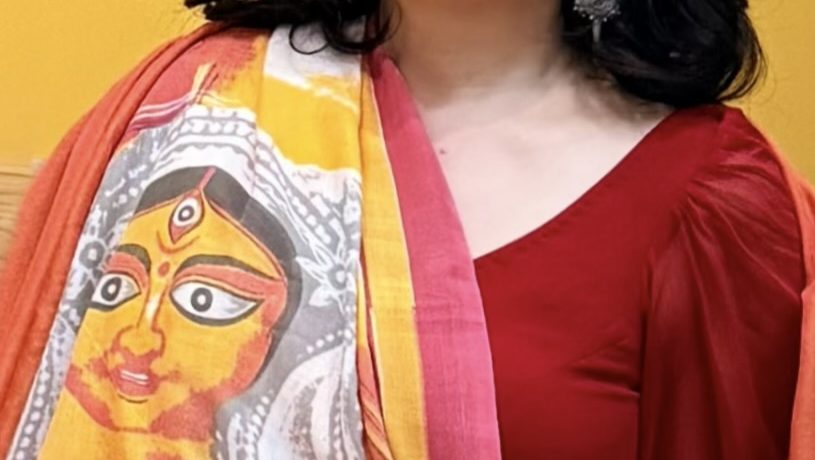
During Dashain’s nine nights, the divine feminine appears in many forms: nurturing and compassionate, powerful and protective, fierce and uncompromising, mother, warrior, creator, destroyer, strong enough to protect the sacred and brave enough to destroy what threatens it. Then Tihar arrives, and we invoke Laxmi, goddess of wealth and prosperity. We clean our homes, light our thresholds, and invite her in.
There is a beautiful philosophyembedded in these traditions. But here is where my admiration meets a question I cannot ignore: if we have spent centuries worshipping feminine power, why have we spent so much longer limiting the power of actual women?
This question stretches across South Asia, where goddess worship has flourished even as women have been expected to stay obedient, self-sacrificing and secondary. We build temples for goddesses and restrictions for women. We celebrate Durga’s courage while telling our daughters not to be “too outspoken,” worship Laxmi while questioning a woman who wants financial independence, and sing of Shakti while asking women to accept decisions made on their behalf.
The word “Allowed”
There is real progress. Girls today have opportunities earlier generations fought hard to create. Women are professionals, entrepreneurs, artists, academics, leaders. And yet, beneath the language of opportunity, an old hierarchy lingers: we allowed her to study, to work, to travel, to choose. That word reveals more than we realise.
Women’s freedom is not a gift bestowed by anyone, nor a favour to be grateful for. Equality is not a concession; it is a correction of an imbalance that has existed too long. Real transformation won’t come merely because our daughters attend university. It will come when a woman’s achievement is no longer a threat to patriarchal authority, when a successful daughter isn’t praised as an exception, “not less than a son,” when a woman who speaks her mind isn’t called difficult, and choosing her own path isn’t abandoning tradition. It will come when we teach our sons that equality takes nothing from them, and that women were never meant to stand behind them.
What Women can Learn from the Goddesses
The lessons of our goddesses are not for men alone. For nine nights, we celebrate different manifestations of the feminine divine, and one form is never diminished by another. Perhaps we, as real women, need to learn the same thing: that making space for another woman does not make us lesser. Her success does not take from ours. Her voice does not silence ours.
This is worth examining closely by those of us fortunate enough to hold positions of influence. Empowerment cannot simply mean “I made it.” It must also mean “I will keep the path open for others to rise.” In Nepal, women have reached remarkable positions, but that success doesn’t always widen the road for those who come after. Sometimes the women who fought hardest to enter the room are most reluctant to open the door behind them. Is it insecurity, fear of being overshadowed, or the old scarcity mentality that told women there was never room for too many of them?
The goddesses offer a different model. Each has her own strength and purpose; none needs to shrink for another to shine. Neither should we.
The Sound of Memory
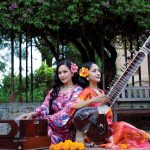
There is another dimension of these festivals I find endlessly moving: their music. Our festivals are rarely silent; they live through bells, conch shells, mantras, bhajans, drums and the exuberant call-and-response of Deusi-Bhailo. Music gives festivals their emotional memory, making the divine feel close.
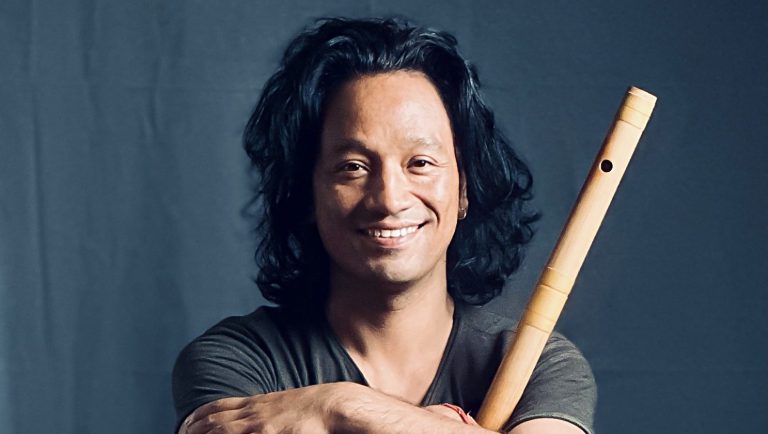
My own introduction to music rooted in the feminine divine came through my father, Gopal Yonjan. Before Dashain in 1990, he composed a piece based on the sacred chants of Nava Durga, set for dance, which I had the honour of performing on stages in South Korea, Japan, Nepal and India. As a young performer, I was captivated by the Sanskrit shlokas, drawn instinctively to understand the divine feminine they invoked.
A young person may not grasp the full philosophy of Durga, but she will remember the words and melody, and the meaning will find her later. A child may not know every verse of a bhajan, but years on, its opening notes can carry her straight back to her childhood home. That is the power of music: it preserves what written history sometimes cannot.
Deusi-Bhailo is perhaps the most vibrant expression of this. As groups move house to house singing and dancing, something larger than entertainment happens: people become a community, if only briefly. Doors open, food is shared, blessings exchanged. Grandmother knows one verse, mother knows another, the child knows the latest version, and somewhere between them a cultural conversation continues.
Carrying Culture Forward
Our festivals have survived because they adapt. Nepalis abroad celebrate Dashain and Tihar in apartments and borrowed halls, far from the courtyards of childhood, and their children still learn tika, jamara, Deusi-Bhailo and Laxmi Puja. Passing on that heritage is a beautiful responsibility, but it also means recognising that preserving culture does not mean preserving every inequality that travelled alongside it.
We can keep the tika without keeping patriarchy. We can keep Deusi-Bhailo without keeping outdated notions of gender. We can teach our daughters the stories of Durga while letting them write their own. We can teach our sons that respecting women means respecting their autonomy, not guarding their “honour”. We can celebrate Laxmi while recognising that women themselves create wealth, knowledge, culture and community.
For nearly a decade, our family has celebrated “Bhai Tika” as “Didi-Bahini Tika.” By placing tika on each other, my daughters carry the deeper meaning of the tradition forward. Isn’t the essence of the festival love and looking out for one another? Why limit that to one gender relationship?
When I think of the child who waited eagerly for dakshina, sweets and the songs of Deusi-Bhailo, I feel real affection for those memories. But I’m equally grateful that growing older let me look past the excitement and ask what these festivals mean. The same Dashain now makes me think about feminine power; the same Tihar, about the women who create prosperity without recognition; the same Deusi-Bhailo songs, about music’s power to carry culture forward.
This year, as tika is placed on our foreheads and lamps lit at our doorsteps, let us worship Durga, welcome Laxmi, sing, dance and make merry. And let us also ask whether the women beside us are given the same dignity, freedom and respect we so readily offer the goddesses before whom we bow.
Shrijana Singh Yonjan
Disclaimer: The opinions expressed in this article are those of the author and do not necessarily reflect the views of SHINE.
Yonjan is a creative consultant, writer, moderator, and programme director known for advocating women’s and social issues across stage, print, TV and radio. Now based in the U.S., she serves as Director of Gopalaya, a nonprofit preserving the legacy of maestro Gopal Yonjan.